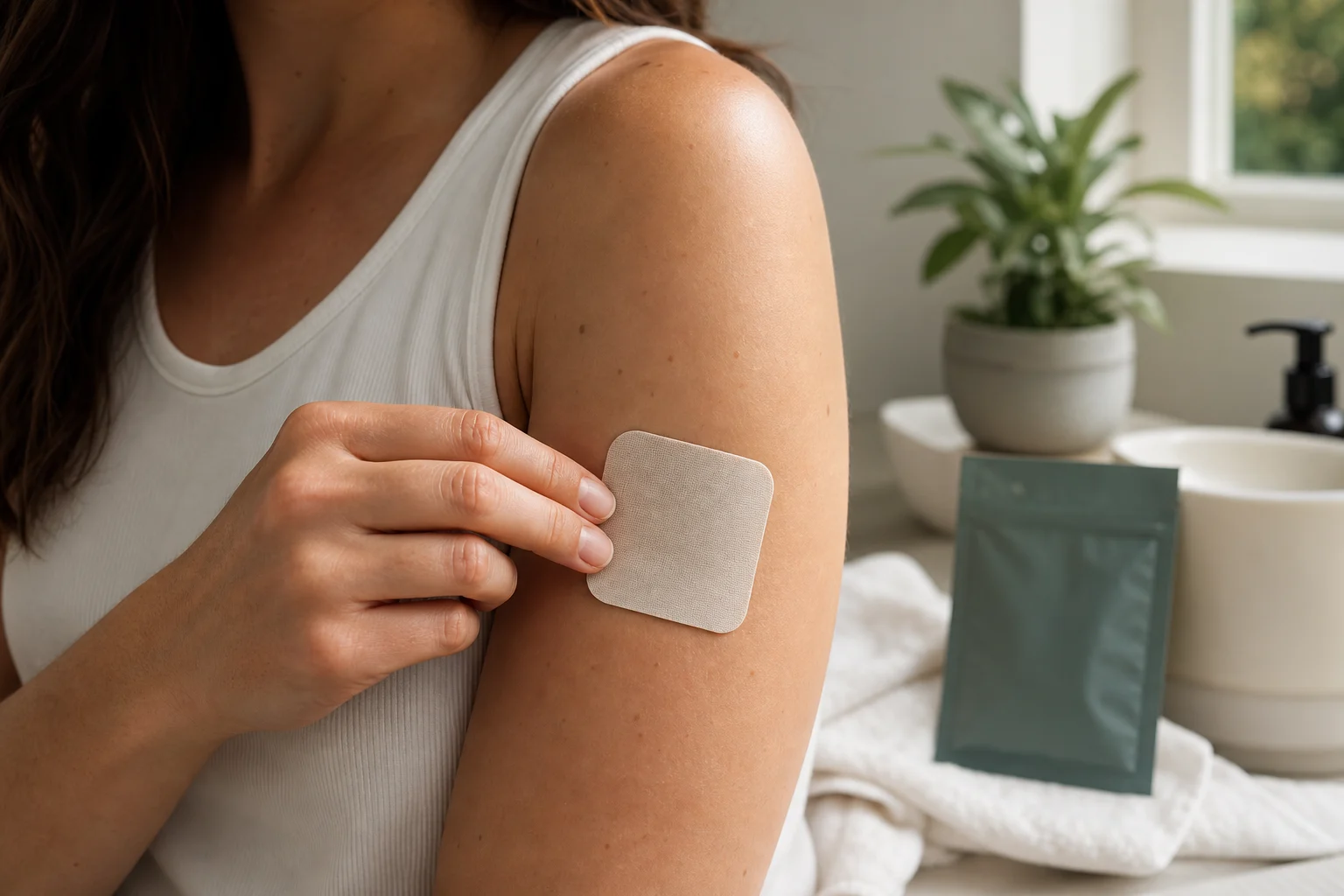
Reviewed 25 June 2026 / CBD patches
Where to put CBD patches
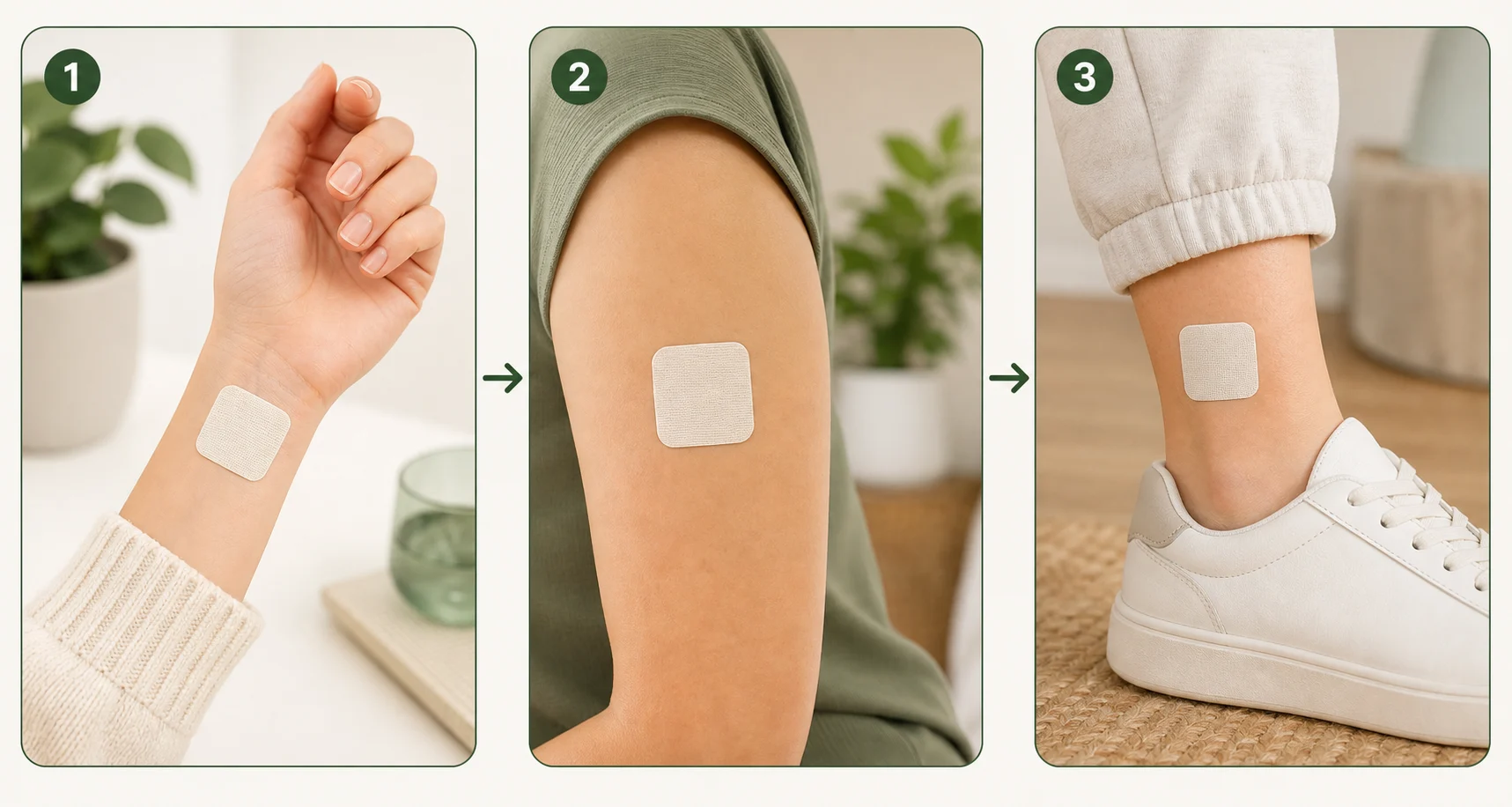
Put a CBD patch on clean, dry, preferably hairless skin where it can sit flat and avoid rubbing. Suitable placement examples include the inner wrist, upper arm, ankle or lower back. Rotate sites each time, avoid irritated, broken or folded skin, and follow the product directions for wear time of up to 24 hours.
Start here
Where should you put a CBD patch?
Think less about finding a magic spot and more about finding skin the patch can stay on. British Cannabis directions name areas such as the top of the arm, inner wrist or ankle. ACCESS CBD directions also give arm, back and leg examples.
Choose a site that is flat, low-friction and easy to check after you apply it.
Where it goes
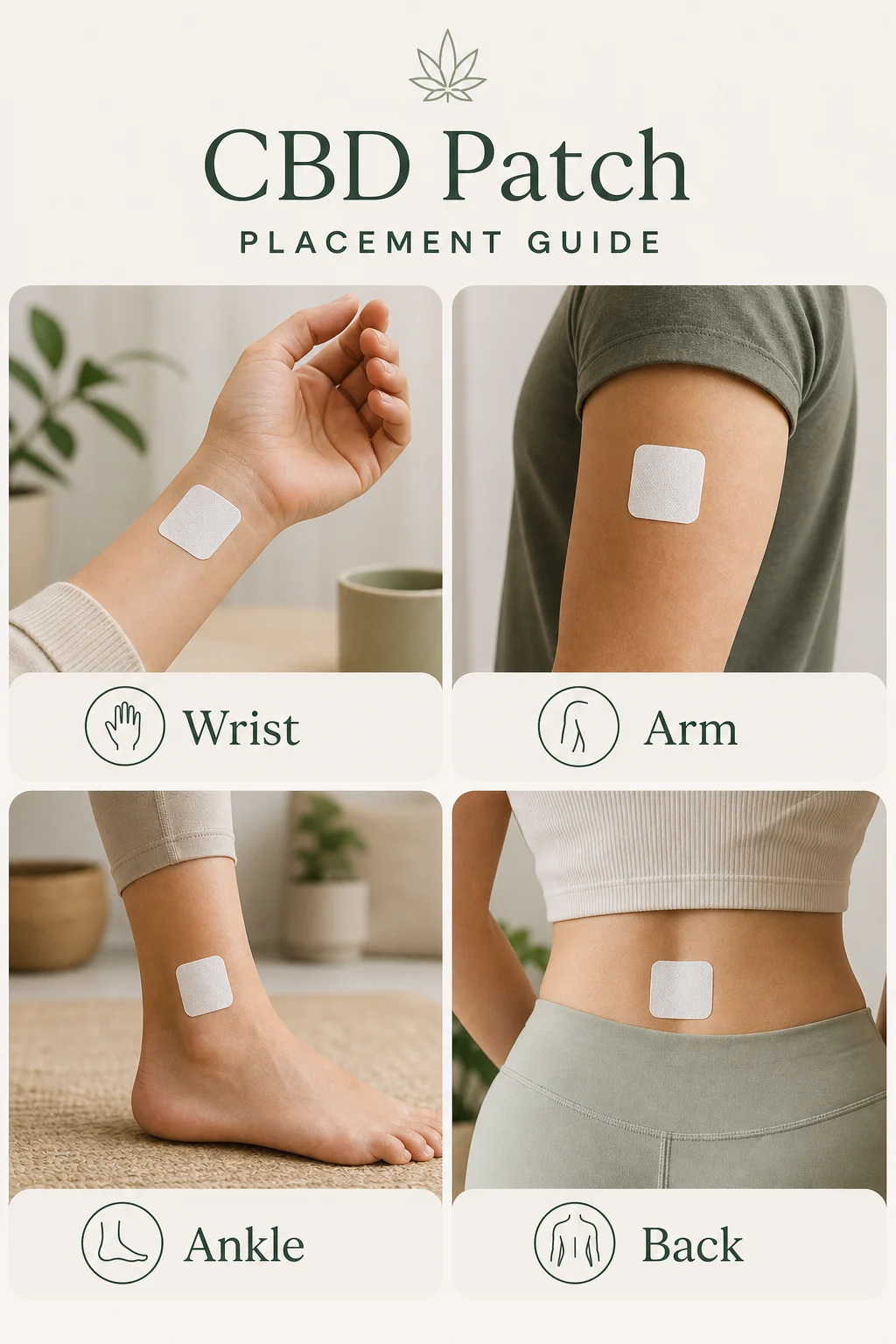
Use four simple zones as your map.
The inner wrist, upper arm, ankle and lower back are useful starting points because they can offer a patch-sized area of flat skin. Lower back only makes sense when clothing will not roll, crease or peel the edge.
- Wrist
- Visible and simple to check.
- Arm
- Discreet under a loose sleeve.
- Ankle
- Works only if socks and shoes do not rub.
- Back
- Use flat, low-friction skin only.
Before it goes on
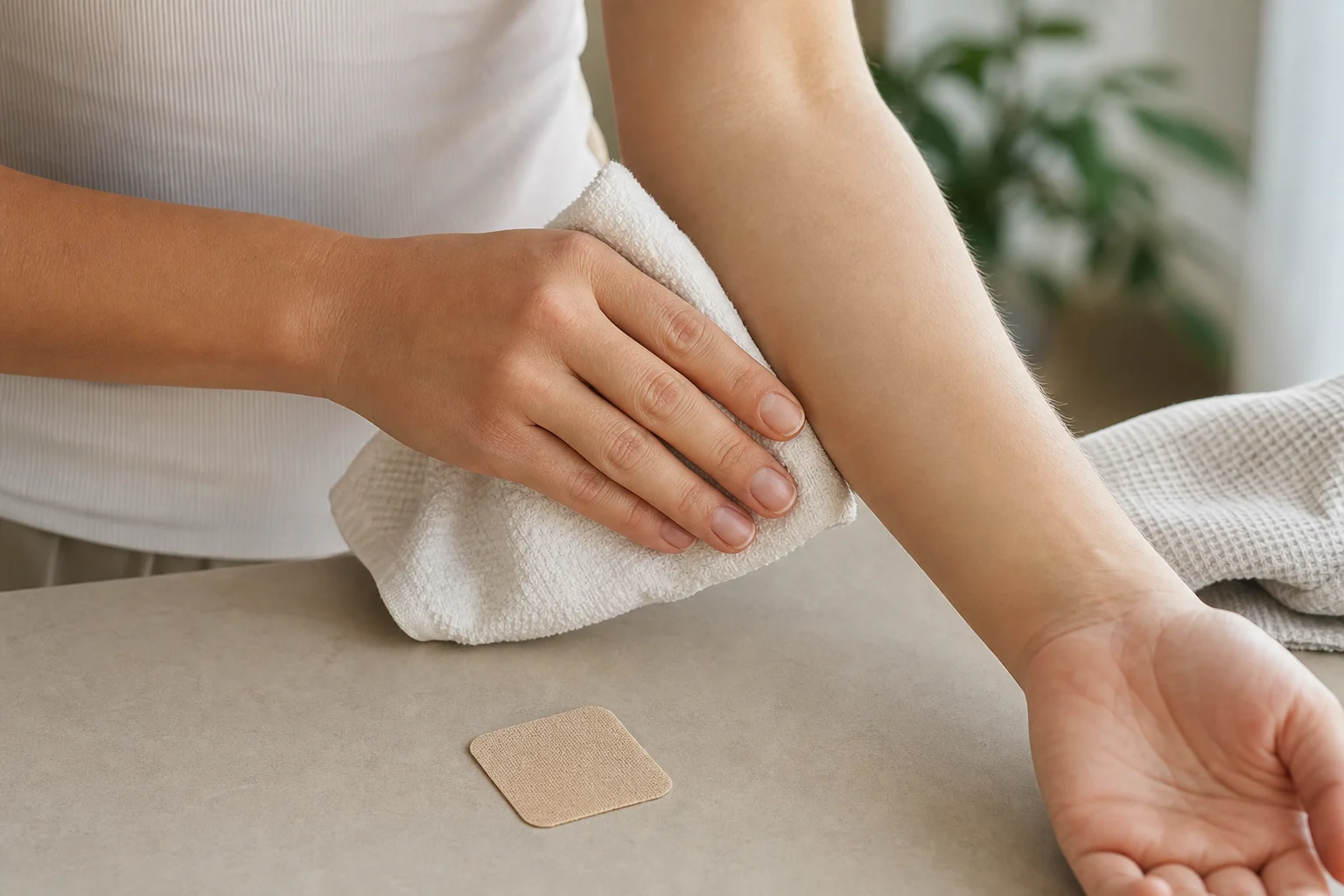
Prep the skin before you press the patch down.
Apply the patch after the skin is clean and dry. If the area is hairy, choose a preferably hairless patch-sized spot nearby rather than forcing it onto hair.
Avoid oils or heavy moisturisers just before application, because general patch-handling guidance warns they can affect adhesion. Once placed, smooth the patch with your hand and check the edges are down.
- Clean
- No oil or heavy residue.
- Dry
- Wait if the skin is still damp.
- Smooth
- Press the patch and check the edges.
Common mistakes
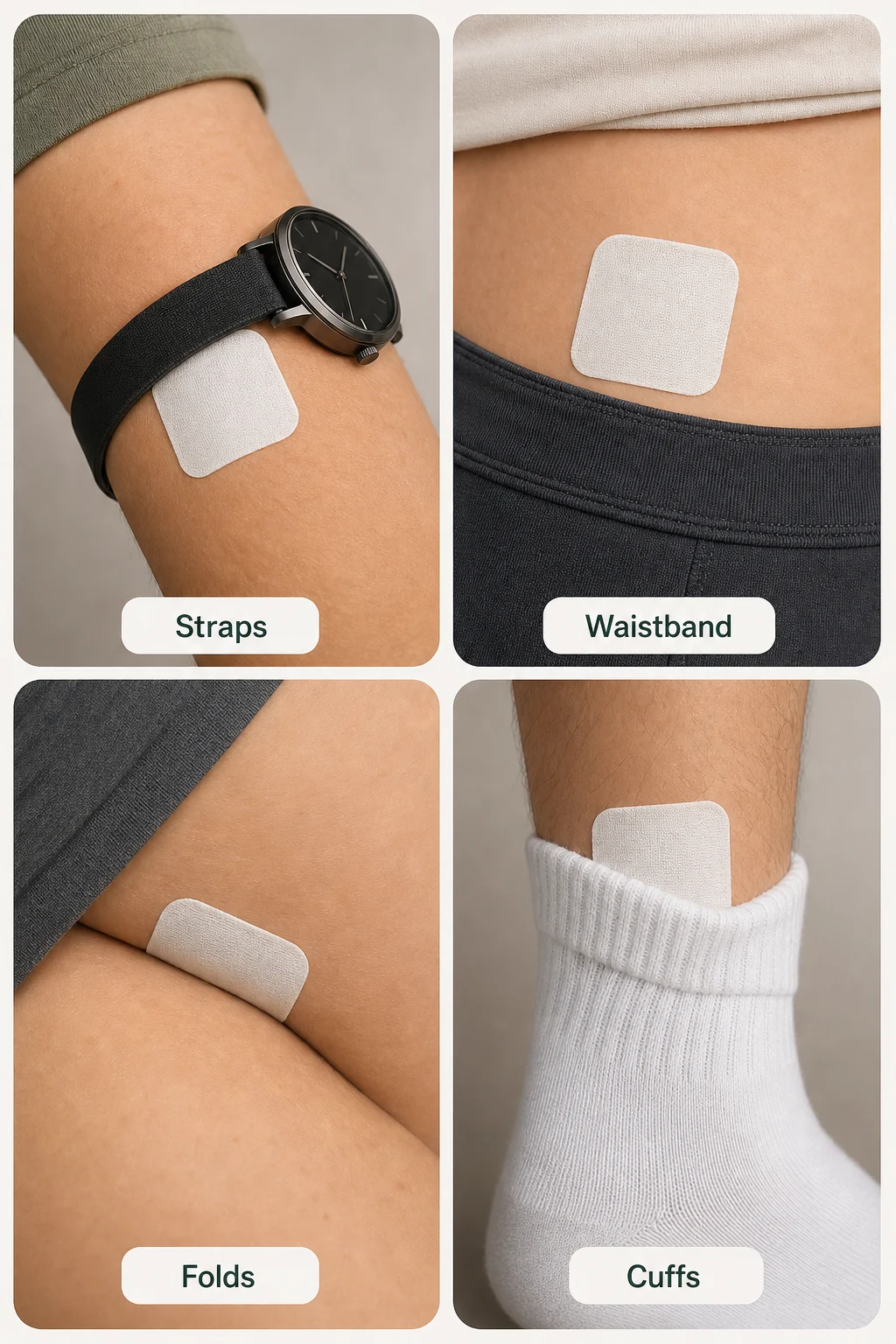
Avoid spots that fight the patch.
Skip irritated, broken, damaged, folded or wrinkled skin. Avoid waistbands, cuffs, socks, watch straps and places that bend or rub all day.
If the patch lifts, catches or feels uncomfortable, the site is doing too much work. Remove it if you notice irritation or hypersensitivity, then follow the product directions before using another patch.
- Straps
- Can drag at the edge.
- Folds
- Can stop the patch sitting flat.
- Cuffs
- Can rub when you move.
Next time
Rotate sites instead of repeating one exact spot.
Do not keep using the same exact patch site. Rotate between suitable areas, such as wrist one day and upper arm or ankle another time, so the same skin is not repeatedly covered.
British Cannabis and ACCESS CBD patches are described for wear up to 24 hours. Follow the label, remove it earlier if skin reacts, and do not stretch the wear time beyond the product directions.
- Rotate
- Move between suitable areas.
- Watch
- Remove earlier if skin reacts.
- Limit
- Use the stated wear time only.

Before you buy again
Check the patch you are actually wearing.
Product facts should come from the patch page, not from effect promises. British Cannabis CBD patches are listed as 50mg CBD patches with 18 plant terpenes and essential oils.
ACCESS CBD® patches are listed as 50mg per patch, with 10 patches making a 500mg pack. Check the product page, batch code and lab-report portal for product identity and testing information, not effect proof.
Proof boundaries
Keep FSA proof in the right lane.
For a patch, start with patch-specific checks: product page, label directions, ingredients, skin guidance, batch code and lab-report portal. The Food Standards Agency's CBD guidance covers CBD food products, not dermal patches.
The record cbdid8516 is for Raw Broad Plant Spectrum Cannabis Oil, application RP-252, supplier BRITISH CANNABIS™ (registered as CBD Health Food Ltd), status Validated, updated 2024-05-17 and checked 2026-06-25. It links to a British Cannabis proof page. That is food/oil context, not patch approval, placement guidance or medical endorsement.
Questions customers ask
Quick answers before you place it.
Most placement questions are really about clean contact, rubbing and whether the patch is still comfortable on your skin.
Can I put a CBD patch on my wrist?
Yes. The inner wrist is one placement example when the skin is clean, dry, preferably hairless and not irritated.
Can I wear it overnight?
Follow the label. These patches are described for wear up to 24 hours, but remove the patch earlier if it lifts, rubs or irritates.
Placement fixes
If a site is not working, move the next patch.
Do not make a difficult spot behave. Choose a calmer area of skin instead.
Can I put a patch on the same place every day?
Rotate sites instead. Moving between suitable areas helps you notice irritation and avoid repeatedly covering one place.
What if my patch will not stick?
Choose clean, dry skin away from oils, moisturisers, folds and friction. Smooth it down and check the edges.
Final answer
Place it simply, then check the proof.
Choose clean, dry, preferably hairless skin that sits flat. Rotate sites, avoid irritated, oily or high-friction areas, follow the label, and use the product page plus batch/lab-report route to check what you are wearing.