15 June 2026 / Industry
Adam Windish at Mary Jane Berlin: what cannabis industry conversations tell us
When British Cannabis CEO Adam Windish joined industry figures at Mary Jane Berlin 2026, the interesting part was not simply being seen at a major event. It was the conversations around access, education, workplace culture and how cannabis businesses mature without losing sight of people.
Mary Jane Berlin 2026
Mary Jane Berlin is where a fast-changing market talks to itself.
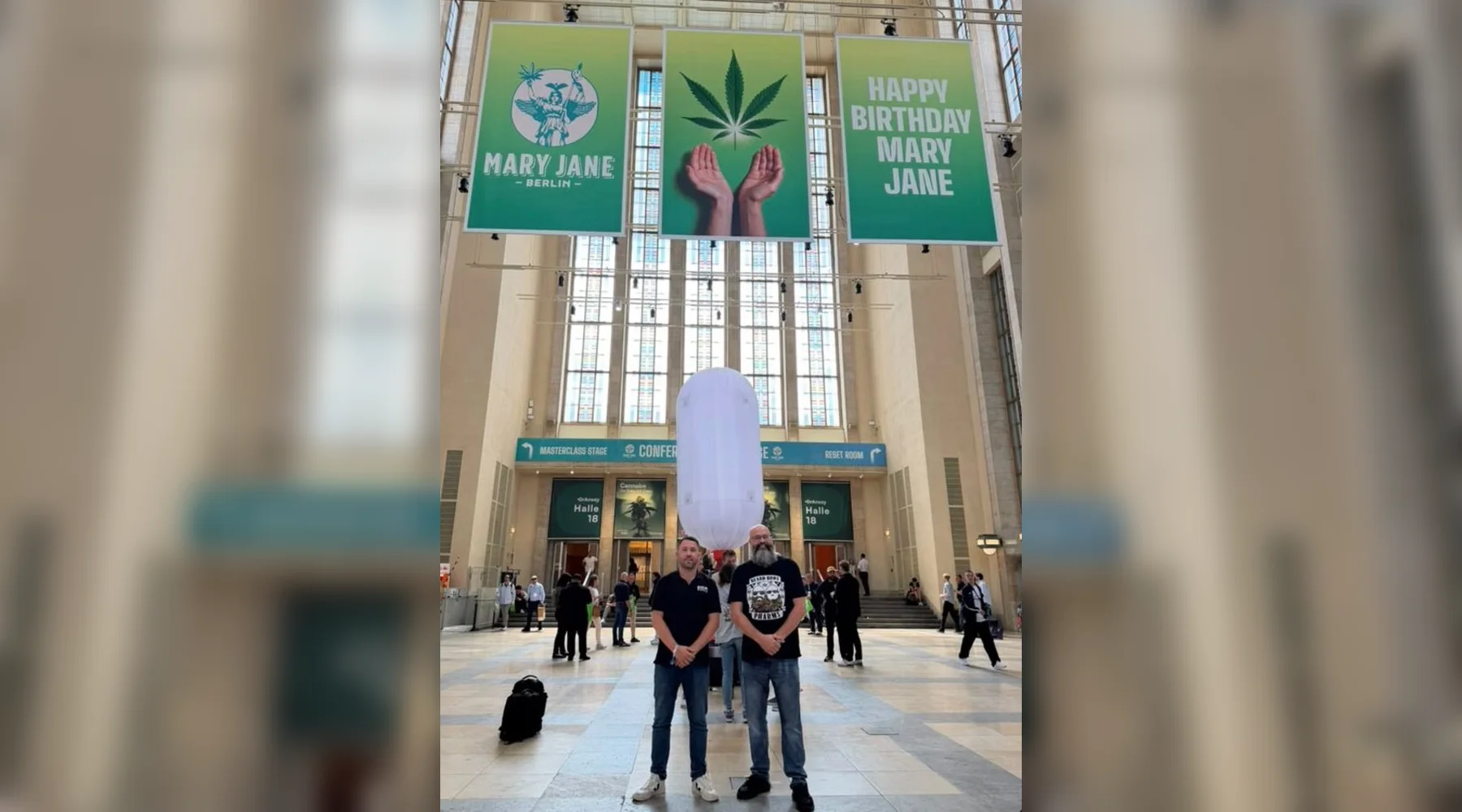
The 2026 edition brought trade, conference programming and cannabis culture together at Messe Berlin, with a B2B visitor day on 11 June followed by public expo and festival days from 12 to 14 June.
Adam Windish was there with Bill Levers of Beard Bros Pharms. On the surface, it is a simple industry moment. In context, it says more about where cannabis is heading: away from isolated local conversations and toward a more connected, more visible, more accountable international sector.
That is why events like this are worth paying attention to. They show what the industry is choosing to discuss when brands, operators, media and advocates are all close enough to challenge each other properly.
Beyond event visibility
The valuable part of a major event is what a brand brings home from it.
For a British Cannabis customer, a Berlin trade event can feel far away from the practical question of whether a product is transparent, well made and easy to understand. For the business, the connection is more direct.
These events are where companies see how other markets are talking about access, retail trust, manufacturing discipline, customer education and responsible public language. Good brands do not just attend; they listen, compare notes and return with sharper questions.
That matters in CBD because the category still carries confusion. Customers need clearer explanations. Trade partners need reliable standards. The wider industry needs companies that can talk about cannabis without either overpromising or hiding behind vague wellness language.
Access, education and trust
Real access depends on confidence as much as availability.
Patient access, consumer education and international collaboration were part of the conversation around the event. Those phrases can sound broad, but they become very practical once a person is trying to understand cannabis-derived products in the real world.
Access means little if people cannot find plain information. Education means little if it avoids the awkward parts: regulation, quality, evidence, limits and what a consumer CBD product is not allowed to claim. Collaboration means little if it does not make the category clearer for people outside the industry.
The best cannabis businesses understand that trust is earned in the details: how a product is made, how it is tested, how its claims are worded and how willing the brand is to explain uncertainty rather than smooth it over.
High functioning, not just high
The workplace conversation belongs in the middle of the cannabis conversation.
Adam was also listed for the Sunday panel "High functioning, not just high", moderated by Heidi Whitman and focused on the importance of women in the professional cannabis workplace.
That is not a side issue. If cannabis wants to be taken seriously as an industry, it has to think seriously about who gets to build it, who gets heard in the room and whose experience becomes part of the standards everyone else later calls normal.
Professionalisation is often discussed through regulation, finance and retail growth. It is also shaped through culture: who leads, who is trusted, how teams talk about risk, and whether the industry can outgrow old stereotypes without replacing them with new ones.

What comes back
The useful test is what a brand brings home from the room.
Conference conversations only matter if they sharpen the work afterwards. For British Cannabis, that means making technical subjects easier to understand: how products are made, what lab reports show, why responsible language matters and how customers can judge quality without needing to become specialists.
That is where an event like Mary Jane Berlin becomes more than a calendar moment. It should improve the way a company explains cannabis, listens to the wider market and turns industry experience into something useful for customers, trade partners and the people still trying to make sense of the category.
Takeaway
Mature cannabis brands have to keep learning in public.
The point of Mary Jane Berlin is not simply visibility. It is the exchange: operators learning from each other, advocates challenging comfortable assumptions, media voices asking better questions and regulated businesses finding clearer ways to explain cannabis to people who need trustworthy information.
For British Cannabis, the value of being in that room should show up afterwards in the work itself: better education, stronger standards, clearer product communication and a more useful public voice.